
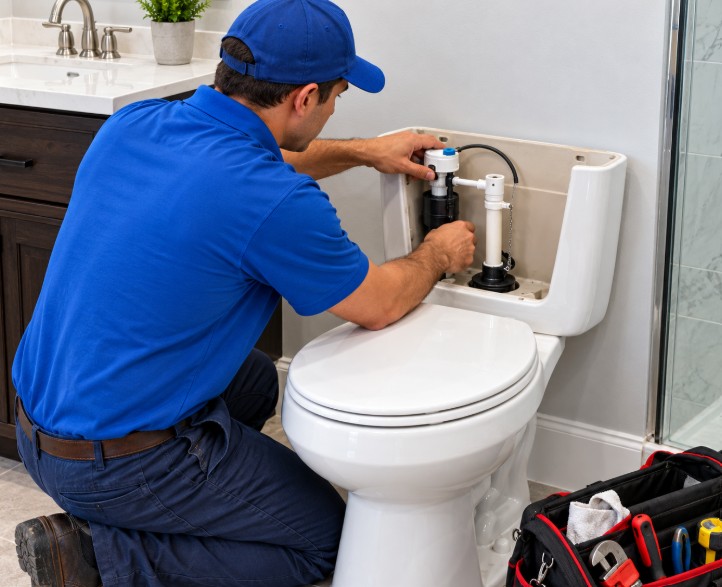
Toilet Repair in Lansing, MI — Running, Leaking, Clogged or Overflowing
A toilet that won't stop running wastes water around the clock. One that rocks or seeps at the base is quietly rotting the floor. One that's overflowing is an emergency. For toilet repair in Lansing, MI, call our Lake Lansing Road office any hour. A licensed plumber arrives with flappers, fill valves, wax rings, flange repair parts and an auger, so most repairs are done on the first visit.
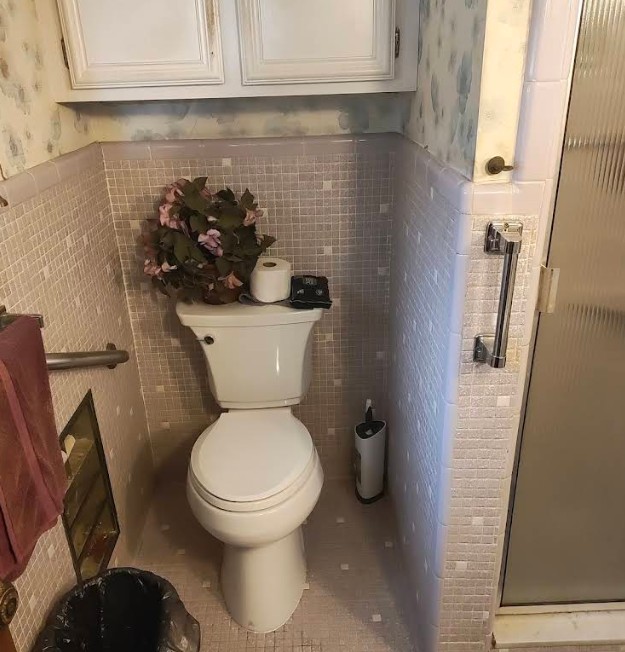
Toilet Problems We Fix — and What Usually Causes Them
| What's happening | Most likely cause | The repair |
|---|---|---|
| Runs constantly or refills on its own ("ghost flushing") | Worn or warped flapper; fill valve set too high or failing; refill tube pushed down inside the overflow tube | New flapper or fill valve, water level reset |
| Tank fills slowly or makes a hissing or whining sound | Debris or mineral buildup in the fill valve; supply valve partly closed | Clean or replace the fill valve; replace a stuck stop valve |
| Water on the floor at the base | Failed wax ring, broken or corroded flange, loose floor bolts | Pull the toilet, repair or replace the flange, new seal and bolts |
| Leak under the tank | Tank-to-bowl gasket or bolts, cracked fill-valve nut, old supply line | New gasket and bolts, new braided supply line |
| Toilet rocks | Loose bolts, uneven floor, broken flange | Repair the flange and reset — shims alone hide the problem |
| Weak or incomplete flush | Low tank water level, chain too slack, partial clog in the trap, mineral-clogged rim holes | Adjust, clear and clean; sometimes a new flush valve |
| Clogs often | Older low-flow design, partial blockage, problems in the drain line beyond the toilet | Auger, camera the line if it keeps happening |
| Bowl won't hold water | Hairline crack in the bowl, or a blocked plumbing vent pulling water out | Replace a cracked bowl; clear the vent |
| Sewer smell in the bathroom | Wax ring no longer sealing, dry trap in a rarely used toilet | Reseal the toilet; flush unused toilets regularly |
| Tank "sweats" and drips on the floor | Cold incoming water meeting humid summer air, or a leaking flapper constantly refilling cold water | Fix the flapper; ventilation or an anti-sweat valve or tank liner |
| Cracked tank or bowl | Impact, overtightened bolts, or freezing in an unheated house | Replace the toilet |
| Handle loose or sticks down | Worn handle nut or lift arm | New handle assembly |
Clogged Toilet? What to Try First
-
1
Use a flange plunger — the kind with the extra rubber sleeve that seals into the drain opening. A flat sink plunger won't seal.
-
2
Plunge with water in the bowl, slowly at first to push air out, then with firm strokes. Ten to fifteen pushes, then try one flush with your hand ready on the shut-off valve.
-
3
Skip the chemical drain opener. It rarely clears a toilet clog, and it leaves caustic water sitting in the bowl for whoever works on it next.
-
4
Stop if a toy, phone or brush went down. Plunging pushes solid objects deeper; we can often pull them out with an auger or by lifting the toilet.
When It's Not the Toilet
If plunging does nothing, or the toilet gurgles when the washer drains, or the basement floor drain or tub backs up when you flush, the blockage is in the main sewer line, not the toilet. In older Lansing homes that's often roots in a clay or cast-iron lateral. Stop using water and call; see our Drain Cleaning and Sewer Line Repair pages for what comes next.
What Not to Flush
Only toilet paper and human waste belong in a toilet. Lansing's wastewater superintendent told WILX that wipes don't break down and clog the pumps at the city's 33-plus lift stations — they do the same thing in your toilet trap and sewer line. Since February 2025, Michigan law requires non-flushable wipes to be labeled "Do Not Flush."
Also keep out: paper towels, tissues, feminine products, cotton swabs, dental floss, cat litter, grease and medicine.
Toilet Problems Specific to Lansing
A Running Toilet Costs Twice Here
The EPA says a fill valve stuck open can waste 4,300 gallons a day, and that household leaks — most often toilets — average 180 gallons a week. In the City of Lansing, sewer charges are based on your water use, so every gallon a running toilet sends down the drain is billed as water from the Lansing Board of Water & Light (BWL) and again as sewer. A running toilet is not a "get to it eventually" repair.
To check: put a few drops of food coloring in the tank. If color shows in the bowl within 10 minutes without flushing, the flapper is leaking. BWL customers can also spot it in their daily usage data from BWL's smart meters — usage that never drops on days the house was empty.
BWL Water Leaves Deposits in Toilets
BWL softens its well water but some hardness remains, and BWL notes that calcium carbonate from the softening process can settle out and accumulate. In toilets that shows up as white crust on the fill valve, the flapper seat and the small rim holes under the bowl's edge — enough to cause slow fills, a leaky flapper seal and a weaker flush. BWL also notes its water carries low levels of dissolved iron that can settle in toilet tanks and stain the bowl below the waterline. Cleaning the rim holes and replacing a crusted flapper or fill valve usually restores the flush.
After a water main break or hydrant flushing nearby, BWL says iron can be stirred up from cast-iron mains. That sediment can also lodge in a toilet's fill-valve screen and cause a slow or noisy refill.
Older Homes, Older Toilets and Flanges
The typical Lansing home was built around 1959, and some still have toilets made before the 1.6-gallon federal limit took effect in 1994 — some use as much as 6 gallons a flush, according to the EPA. Under them, cast-iron closet flanges and drain bends rust over decades. A toilet that keeps leaking at the base no matter how many wax rings it gets usually has a broken or corroded flange underneath; we repair or replace the flange rather than stacking another ring on it.
Basement Toilets and Backups
A basement toilet is the lowest fixture in many Lansing homes, so it's often the first place a main-line clog or a public sewer surcharge shows up. If a basement toilet bubbles or overflows during heavy rain, the city's sewer may be overloaded. City of Lansing homeowners who've had backups from the public sewer may qualify for partial reimbursement of a backwater valve through the Basement Backup Protection Program (B2P2).
Vacant and Winterized Homes
In an unheated house, the water in a toilet tank and trap can freeze and crack the porcelain. When a Lansing rental or vacant house is winterized, the tank should be drained and the trap protected; when water is turned back on, BWL's rules make the customer responsible for confirming the plumbing is sound and heated. We do both.
Repair or Replace?
Most toilet problems are worth repairing — the porcelain lasts for decades and the moving parts are inexpensive. Replacement makes sense when:
| Repair it | Replace it |
|---|---|
| Flapper, fill valve, flush valve, handle, supply line | Crack anywhere in the tank or bowl — even a hairline one |
| Wax ring, bolts or flange | Toilet made before 1994 that uses 3.5 gallons or more per flush |
| One clog | Clogs every few weeks with nothing wrong in the drain line |
| A single worn part on a newer toilet | Discontinued model with parts you can't get, or repeated repairs |
| — | You're remodeling, or want a taller seat or different rough-in |
Choosing a New Toilet
-
•
WaterSense label: these toilets use 1.28 gallons per flush or less — 20% under the federal 1.6-gallon standard — and are independently tested for flushing performance. The EPA estimates replacing old toilets with WaterSense models saves an average family nearly 13,000 gallons a year. In Lansing that saves on sewer charges too.
-
•
Height: standard bowls are about 15 inches tall; "comfort" or chair-height models are about 17 to 19 inches, easier for anyone with knee or hip trouble.
-
•
Bowl shape: elongated bowls are more comfortable; round bowls fit tight older bathrooms better.
-
•
Rough-in: most toilets are 12 inches from the wall to the center of the drain, but older homes sometimes have 10- or 14-inch rough-ins. We measure before you buy.
-
•
Dual flush: a lighter flush for liquids, a full flush for solids.
How a Toilet Repair Goes
Tell us the symptom on the phone — running, leaking where, clogged, overflowing — so the right parts are on the truck.
Diagnose. Dye test, check the water level and fill valve, look for cracks, rock the toilet to test the flange, and check whether other drains are involved.
Price it before we start. You approve the repair before any work.
Repair. Most tank repairs take under an hour. Pulling the toilet for a wax ring or flange takes longer, and we check the subfloor while it's off.
Test. Several flushes, a dye test, and a dry-paper check around the base and supply line.
Clean up. Old parts and any removed toilet leave with us.
Parts We Carry
| Part | What it does |
|---|---|
| Flapper | Seals the tank until you flush; the EPA recommends replacing it at least every five years |
| Fill valve | Refills the tank and shuts off at the right level |
| Flush valve | The opening the flapper seals; replaced when the seat is cracked or crusted |
| Wax ring or wax-free seal | Seals the toilet to the drain |
| Closet flange and repair rings | Anchors the toilet to the floor and drain |
| Tank-to-bowl kit | Gasket and bolts for two-piece toilets |
| Braided supply line and quarter-turn stop valve | Replaces old rubber or solid lines and seized valves |
| Closet auger | Clears clogs and retrieves objects without scratching the bowl |