
Burst Pipe Repair in Lansing, MI — Water Off, Pipe Fixed, Day or Night
A split pipe can put gallons of water into a basement or ceiling every minute. When you need burst pipe repair in Lansing, MI, call us at any hour. A person in our Lake Lansing Road office answers, walks you through shutting off the water, and sends a licensed plumber with the fittings to repair copper, PEX and galvanized lines on the first visit.
Burst Pipe Repair Services in Lansing, MI
We repair burst and frozen pipes in every material you'll find in Lansing homes, and we carry the fittings for each on the truck.
| Pipe or location | What usually goes wrong | How we fix it |
|---|---|---|
| Copper supply lines | Splits lengthwise when frozen; pinholes in older pipe | Cut out the damaged section and solder or press-fit new copper |
| PEX lines | Fittings crack or pull apart in a hard freeze | Replace fittings and damaged tubing with crimp or expansion fittings |
| Galvanized steel (older homes) | Rusted thin from inside, bursts at threads and joints | Replace the failed run, often converting to copper or PEX |
| Main water line into the house | Freezes or cracks where it enters through the foundation | Repair or replace the line on your side of the meter |
| Outdoor faucets (hose bibs) | A hose left attached splits the pipe inside the wall | Replace with a frost-free bib and repair the line behind it |
| Pipes in exterior walls, garages, porches and crawlspaces | Freeze first in a cold snap | Thaw safely, repair, then insulate or reroute |
| Washer hoses and water heater connectors | Rubber or braided lines rupture | Replace with new braided supply lines and shut-offs |
| Mobile and manufactured homes | Lines under the floor freeze behind damaged skirting | Thaw, repair, and add heat cable and insulation where needed |
Why Pipes Burst in Lansing
Long, Hard Cold NWS Data
National Weather Service records for Lansing show about 130 nights a year at or below freezing and roughly a week of below-zero mornings each winter. A single cold night rarely bursts a pipe. A string of them — especially with wind pushing cold air through a rim joist or foundation crack — does.
The Leak Shows Up on the Thaw Thaw Pattern
When a pipe freezes, the ice can plug the crack it just made. Nothing leaks until the weather warms and the ice melts. After a January 2025 cold snap, the City of East Lansing described exactly that: broken lines stayed sealed by ice until temperatures rose. That's why our phones ring hardest on the first mild day after a deep freeze, not during it.
Furnace Failures Critical Risk
The worst burst-pipe floods we see start with a furnace or boiler that quits overnight. Once the heat is off, every pipe in the house is exposed. Local plumbers told WILX in January 2026 about a home where exactly that happened — the furnace went down, pipes froze and burst, and the whole house flooded. If your heat goes out in winter, call about the furnace and shut the main water valve until it's back on.
Older Homes and Older Pipes 1959 Average
The typical Lansing home was built around 1959, and about a quarter of the city's houses predate 1940. Many still have galvanized steel lines that have rusted thin from the inside, or copper runs through uninsulated exterior walls, enclosed porches and unheated additions. Older pipe fails at lower pressure, so a freeze that a newer line would survive can split it.
Mobile and Manufactured Homes Skirting Gaps
Local plumbers say manufactured homes take the most freeze damage in a Lansing cold snap, because the water lines run under the floor close to the skirting. A gap in the skirting lets wind straight onto the pipes. Check skirting before winter, not after.
Pipes in the Wrong Places MI Code Depth
The usual suspects in Lansing homes: kitchen sinks on outside walls, bathrooms over garages, lines in crawlspaces, laundry rooms on slab additions, and the stretch of main line just inside the foundation. Michigan's building code sets frost protection at 42 inches, but the pipe inside your basement wall is only as warm as the air around it.
Signs of a Frozen or Burst Pipe
Frozen, not burst yet
- A faucet gives a trickle or nothing on a cold morning while others work
- Frost on an exposed pipe, or a pipe that feels ice-cold and hard
- A toilet that won't refill
Probably burst
- Water dripping from a ceiling, spreading across a basement floor, or coming out of a wall
- The sound of running water with every fixture off
- Pressure drops throughout the house
- The water meter dial spinning when nothing is running
- A bulge, stain or soft spot in drywall below a bathroom or along an outside wall
How We Repair a Burst Pipe
From stopping pressurized flooding to permanent brazed or crimped fittings, every step is executed with precision to protect your home.
Stop the water
If it's still running when we arrive, we close the main or the nearest working valve, and replace a seized valve if needed.
Find every break
A freeze rarely breaks just one spot. We check the full run and any other lines that froze, using moisture and thermal tools for leaks inside walls.
Thaw safely
We use controlled heat — never a torch near framing — and open the line so pressure can escape as the ice melts.
Quote it upfront
You get the price before we cut anything.
Make a permanent repair
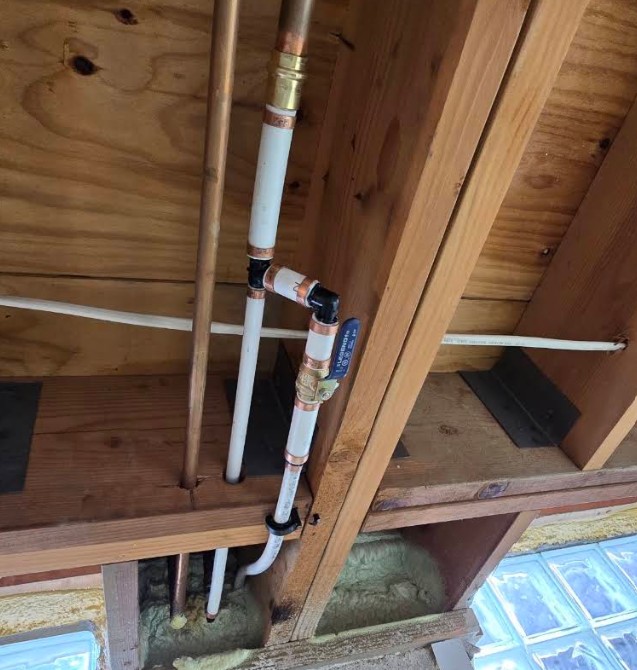
We cut back past the split to sound pipe and install a proper soldered, press or crimp fitting. Clamps and push-on couplings are for getting water back on tonight, not for staying in a wall.
Pressure-test and restore water
We bring the system back up slowly, watch every joint, and check the water heater and fixtures.
Fix the cause
Insulation, heat cable, a frost-free hose bib, sealing a draft, or rerouting a line out of an exterior wall — so it doesn't happen again next January.
Temporary vs. Permanent
If a full repair means opening a finished ceiling at 2 a.m., we can install a rated temporary fitting, get your water back on, and return for the permanent fix. We'll always tell you which one you're getting.
Whose Pipe Is It, and Will Insurance Help?
Utility Line or Yours
| Where the break is | Who to call first |
|---|---|
| Water main in the street, or water bubbling up at the curb | Your water utility — BWL customers call 517-702-6490 for main breaks and pressure problems |
| Service line before the meter (BWL customers) | BWL first; it has owned service lines up to the meter, unlike most utilities |
| East Lansing, Okemos or Haslett service lines | The City of East Lansing or Meridian Township, which run their own systems |
| Anything after the meter — basement pipes, walls, fixtures, outdoor faucets | Us |
Insurance Basics in Michigan
The Michigan Department of Insurance and Financial Services (DIFS) says homeowners policies usually cover damage from sudden events like burst pipes. Claims can be harder when a break comes from long-term wear, a slow leak, or a home that wasn't kept heated, so read your policy's conditions before winter. A few things that help:
- Photograph the damage and the broken pipe before cleanup, and keep the piece we cut out.
- Ask us for an invoice that states the cause — “frozen and split supply line” — and the date.
- Ask your insurer whether your policy covers temporary living costs if the house is unlivable.
- Know your deductible ahead of time; DIFS recommends having a plan to pay it.
- Questions about a claim? DIFS runs a consumer hotline at 877-999-6442, weekdays 8 a.m.–5 p.m.
Preventing Burst Pipes in a Lansing Winter
Practical steps to protect plumbing during severe Michigan freeze-thaw cycles and extended polar vortexes.
Before the First Hard Freeze (October–November)
- Disconnect garden hoses and shut off and drain outdoor faucets from the inside valve.
- Find your main shut-off and make sure it turns. A seized valve is the most common reason a small break becomes a big flood.
- Seal drafts around rim joists, dryer vents and pipe penetrations in the basement.
- Insulate pipes in exterior walls, crawlspaces, garages and over unheated porches; add thermostat-controlled heat cable where insulation isn't enough.
- Mobile and manufactured homes: repair gaps in the skirting.
- Get the furnace or boiler serviced — no heat means frozen pipes.
During a Cold Snap
- Keep the house heated. The state insurance department recommends at least 65°F.
- Open cabinet doors under sinks on outside walls.
- Let a thin stream run from faucets on the coldest walls. It helps in a normal freeze, but local plumbers warn it isn't a guarantee in extreme cold.
- Keep the garage door closed if water lines run through it.
Leaving Town
- Leave the heat on and have someone check the house daily.
- For longer trips, shut the main water valve and open a faucet to relieve pressure. For a vacant house or rental, ask us about full winterization.
If a Pipe Freezes
Burst Pipe Repair FAQs
Straightforward answers to the most common questions Lansing homeowners ask during plumbing freeze emergencies and pipe failures.
Q1 Do you offer emergency burst pipe repair in Lansing overnight?
Q2 How fast can you get here?
Q3 How much does burst pipe repair cost?
Q4 Can a burst pipe be patched?
Q5 Why did my pipe start leaking after it warmed up?
Q6 Will my homeowners insurance cover a burst pipe?
Q7 Should I call the Board of Water & Light or a plumber?
Q8 Do you dry out the water damage too?
Need Emergency Burst Pipe Assistance Right Now?
A licensed plumber from our Lake Lansing Road shop is on standby 24/7 across Greater Lansing.