
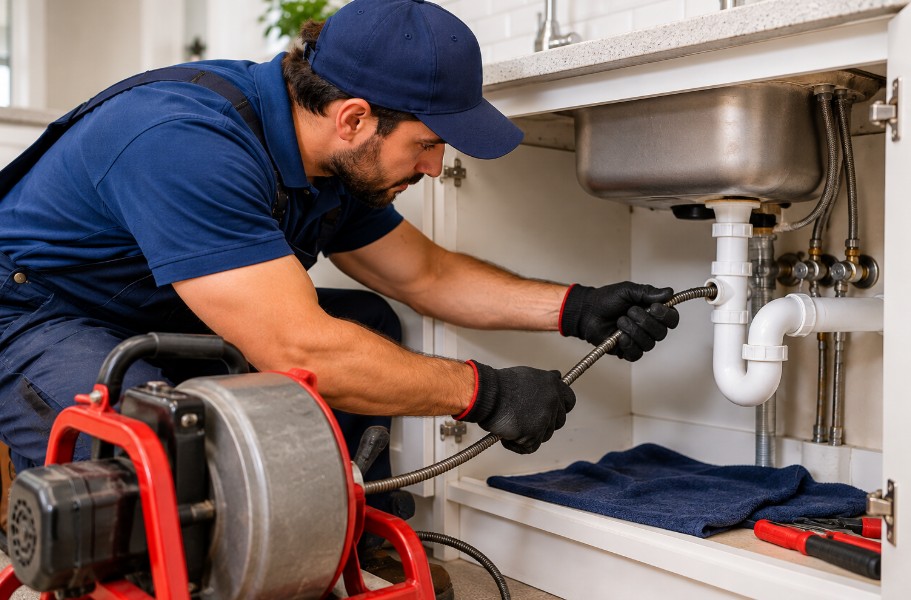
Drain Cleaning in Lansing, MI — Clogs and Sewer Backups Cleared, Emergency Service
A slow kitchen sink is an annoyance. Sewage coming up a basement floor drain is an emergency. For drain cleaning in Lansing, MI, call our Lake Lansing Road office any hour. A licensed plumber clears the line with the right tool for the job — cable machine, hydro jetter or camera — and you get the price before work starts.
- Stop all water use — no flushing, showers, laundry or dishwasher. Every gallon you send down comes back up at the lowest drain.
- Keep kids and pets away from the water; sewage carries bacteria.
- Don't pour chemical drain opener into a backed-up line — it sits in the pipe and splashes on whoever opens it next.
- Call us. If neighbors are backing up too, also report it to the City of Lansing Public Service Department; the problem may be in the city main.
Drain Cleaning Services in Lansing, MI
Hydro Jetting
High-pressure water scours grease, scale and root mass off the pipe walls instead of just punching a hole through the clog. It's the right tool for recurring kitchen-line clogs, restaurant lines and main sewers that back up every few months.
Sewer Camera Inspection
We run a waterproof camera through the main line to see what caused the backup — roots, a belly holding water, a crushed section, an offset joint — and show you the video. We also do camera inspections for Lansing home buyers before closing.
| Drain | What usually clogs it | How we clear it |
|---|---|---|
| Kitchen sink and disposal | Grease, food scraps, coffee grounds, rice and pasta | Cable machine through the trap arm; hydro jetting when grease coats the whole line |
| Bathroom sink, tub and shower | Hair and soap scum | Small-drum cable; trap and pop-up cleaned |
| Toilet | Wipes, paper towels, feminine products, kids' toys | Closet auger; pull the toilet if the object is lodged |
| Laundry standpipe | Lint and fabric fibers | Cable and flush; lint trap recommended |
| Basement floor drain | Sediment, or a blocked main line pushing water back up | Clear the drain, then check the main line behind it |
| Main sewer line | Tree roots, grease, wipes, sagging or broken pipe | Root-cutting head on a large cable, hydro jetting, camera inspection |
| Outdoor and storm drains, downspouts | Leaves, sand, ice | Cable or jetter; check for roots and collapsed tile |
Is It One Drain or the Main Line?
This is the most useful question to answer before we arrive, because it changes the tool and the urgency.
| What you're seeing | What it usually means | Urgency |
|---|---|---|
| One sink, tub or toilet is slow; everything else drains fine | A local clog in that fixture's branch | Same day or next day |
| Toilet gurgles when the washer drains, or the tub bubbles when you flush | Main line partly blocked; air is being pushed back up | Soon — it's heading toward a backup |
| Several fixtures slow at once, especially on the lowest floor | Main line clog | Same day |
| Water or sewage coming up the basement floor drain | Main line blocked or the city sewer is surcharged | Emergency — stop using water |
| Backup only during heavy rain or snowmelt | The public sewer is overloaded, or groundwater is getting into your line | Emergency during the storm; plan prevention after |
| Sewer smell in the basement with no visible clog | A dry floor-drain trap, or a cracked line | Pour water in the drain first; call if it persists |
| Same drain clogs every few months | Roots, a sag in the pipe, or grease built up on the walls | Schedule a camera inspection |
If you're not sure, call. We'll ask which drains are affected and on which floor — that usually tells us what we're dealing with.
Why Lansing Drains Clog
Old Sewer Laterals and Tree Roots
The typical Lansing home dates to around 1959, and about a quarter of the city's houses were built before 1940. Many of those still drain through clay tile or cast-iron sewer laterals. Clay joints loosen over time and roots from mature yard and street trees find their way in, grow into a mat, and catch everything that flows past. Cast iron rusts and scales on the inside, narrowing the pipe. Both mean a main line that clogs again and again until the cause is dealt with.
Wipes — Including the "Flushable" Kind
Lansing's wastewater superintendent told WILX in 2024 that wipes don't break down and regularly clog the pumps at the city's 33-plus lift stations, sending crews out at night and wrecking equipment. They do the same thing in your sewer line, especially where roots or a sag give them something to snag on. Since February 2025, Michigan law requires non-flushable wipes to carry a "Do Not Flush" label. Only toilet paper belongs in the toilet.
Grease
Fats, oils and grease go down warm and harden in the pipe. Grease buildup in Lansing's sewers has been a big enough problem that a 2023 University of Michigan fellowship project with the city drafted tougher grease-interceptor rules for its 440-plus food service establishments. At home, it's the same chemistry: a little bacon fat after every breakfast eventually closes the kitchen line, and holiday cooking is when we see the most grease clogs.
Heavy Rain and Snowmelt
Older parts of Lansing were built on combined sewers that carry stormwater and sewage in the same pipe. The city is separating them under a long-term program, but until it's finished, a hard rain on frozen or saturated ground can surcharge the system and push water back up basement floor drains. A clogged or root-filled lateral makes it worse, because there's no spare room in the pipe.
Deep Cold
In a hard freeze, drain lines in crawlspaces and under manufactured homes can freeze solid, and local plumbers have warned that dripping faucets to protect supply lines can end up freezing the drain below. A plumbing vent capped with frost can also make drains gurgle and slow down until it clears.
Sewer Backups: Your Line or the City's?
Your line: the sewer lateral running from your house to the main in the street. Clogs, roots and broken pipe in it are generally the property owner's to fix — Lansing's own backup-assistance program, for example, excludes lateral problems like roots and crushed pipe.
The city's line: the public main under the street. If several homes on your block back up at once, or it happens only during a big storm, the main may be overloaded or blocked. Report it to the City of Lansing Public Service Department; East Lansing and the townships have their own public works offices.
We can tell which it is. If our cable reaches the main without finding a blockage, or the camera shows the lateral flowing and the main full, we'll tell you it's the city's problem and give you the video.
Thinking of filing a claim against the city? Michigan's Public Act 222 of 2001 allows a claim for a sewer backup only if the public system had a defect that was a substantial cause of the damage — a storm bigger than the system was designed to carry generally doesn't count. You must give the city written notice within 45 days of discovering the backup, so photograph the damage and keep our invoice and camera video.
Stopping Backups for Good: Backwater Valves and Lansing's B2P2
A backwater valve on your main line lets water out but closes when the public sewer pushes back. If your City of Lansing home has had sewage back up from the public sewer, the city's Basement Backup Protection Program (B2P2) may reimburse part of the cost of a backwater valve or sump system: the first $1,000 plus 75% of the next $5,000, up to $4,750, as of 2026. You need to own the property and be current on city taxes, and the work needs a permit and a city inspection before you're reimbursed. Check eligibility with the Public Service Department at (517) 483-4456 before work starts — we'll provide the itemized quote and permit paperwork.
How We Clean Drains in Lansing
Clearing vs. Cleaning
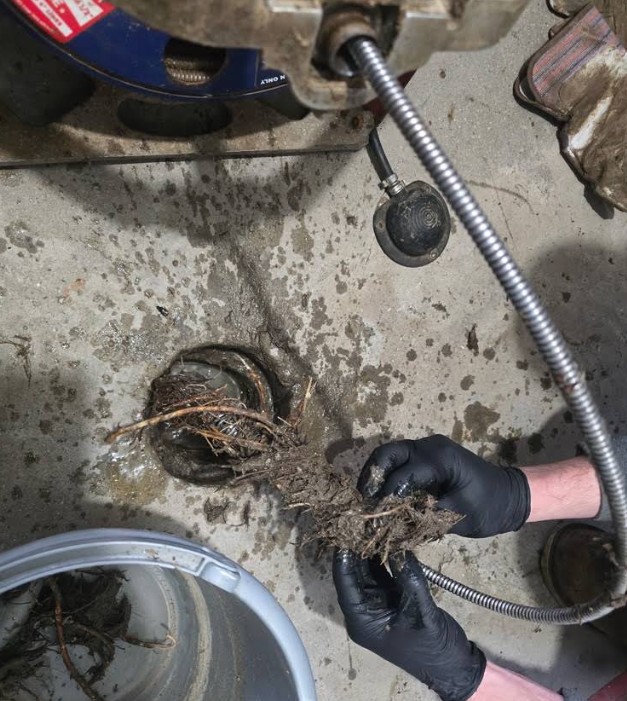
Punching a small hole through a clog gets water moving today, but the rest of the blockage stays on the pipe walls and the clog is back in weeks. We size the cutting head to the pipe, work the full length of the line, and on main lines we follow up with a camera so we know the pipe is actually clean.
| Method | Best for | What it can't do |
|---|---|---|
| Cable machine (auger) with cutting head | Most sink, tub, toilet and main-line clogs; cutting roots | Doesn't scour grease or scale off pipe walls |
| Hydro jetting | Grease, scale, sludge and root regrowth; restaurant and recurring lines | Not for pipe that's already broken or badly deteriorated — we camera first |
| Camera inspection | Finding the cause: roots, sags, cracks, offsets; home-buyer checks | Doesn't clear anything on its own |
Our Process
- Ask which drains are affected and when it started, so we bring the right machine.
- Find an access point — a cleanout if your home has one, or a fixture or roof vent if not.
- Give you the price before we start.
- Clear and clean the line, then run water to confirm full flow.
- On main lines, camera the pipe and show you what's in it.
- Clean up, and tell you whether it was a one-off clog or something that will come back — roots, a sag or a broken section — and what fixing it involves.
If your house has no outside cleanout, we can install one. It makes every future main-line cleaning faster and keeps the mess out of your basement.
Hiring tip: Lansing's city code (Chapter 814) says only a state-licensed master plumber registered with the city, or a sewer cleaner licensed and insured through the Department of Public Service, may clean sewers for hire in the city. Ask anyone you call whether they qualify.
Keeping Lansing Drains Clear
Never down the drain or toilet:
- Wipes of any kind — baby, cleaning, makeup or "flushable"
- Cooking grease, oil, bacon fat, gravy and dairy
- Paper towels, tissues, feminine products, dental floss, cotton swabs
- Coffee grounds, eggshells, rice and pasta (even through the disposal)
- Paint, solvents and leftover medicine
Easy habits that help:
- Let grease cool, scrape it into a can or jar, and put it in the trash.
- Wipe greasy pans with a paper towel before washing.
- Put strainers in tub, shower and kitchen drains; a lint trap on the washer hose.
- Pour a bucket of water into basement floor drains a few times a year so the trap doesn't dry out and let sewer gas in.
- Skip the chemical drain openers. They rarely clear a real clog, they're hard on older pipe, and they leave caustic water for whoever opens the drain next.
- If you have big trees and an older home, a camera inspection or maintenance cleaning every year or two catches roots before they cause a backup.
- Before winter: insulate drain lines in crawlspaces and keep skirting on manufactured homes intact.
Commercial and Restaurant Drain Cleaning
Restaurants, bars, apartment buildings, offices and student rentals put far more through their drains than a house does. We handle:
The City of Lansing has been working on stricter grease-interceptor rules for food service establishments. If your interceptor is undersized or the lines keep clogging between pump-outs, we can tell you why and what fixes it.